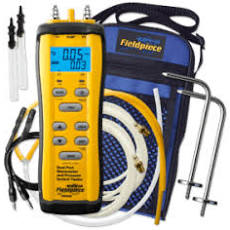
Static Pressure Measurement
Static Pressure measurement is more important than ever. Due to changing design conditions of furnaces and coils, tolerances have been reduced dramatically.
Duct Static Pressure - What Is It?
Duct static pressure is a crucial but underrated concept in the heating and cooling world. Generally speaking, the term refers to the resistance of airflow through an HVAC system. This controls the speed at which the air travels through the ducts to the rooms of the building, which can have a major impact on the system's heating and cooling capacity. At the most basic level, your HVAC equipment must produce more pressure than the static value in the ducts, or it won't be able to force air through the ductwork.
Most residential furnaces are rated to have a total external static pressure of no more than .5"wc. This includes the filter, ductwork, registers, and coil. Attached is a chart on where to use your digital manometer and static pressure tip to properly measure. Making these measurements will ensure that you are moving the cfm that is required by the equipment and also lets you know that the equipment is running within specification. A lot of equipment gets a bad name because we are not looking at this measurement on installs/service. See Video below.
To check airflow on a furnace do the following steps.
- Get a manometer with static pressure probe.
- Start furnace in either cooling or heating
- Insert static pressure probe between the filter and the blower wheel, note the reading
- Insert probe in supply after furnace and before the coil, note the reading.
- Take the two readings and add them together. The return air pressure will be negative, disregard the negative sign and add as two positive numbers. This number is your T.E.S.P. or total external static pressure.
- Open up furnace manual to the appropriate blower chart for the mode you are in. (heating or cooling)
- Then at the top of the chart you will see ESP or TESP reading, follow the chart till you see your measured number, follow down the chart to the appropriate furnace and tap that is being used.
- Note CFM that unit is putting out based on your test.
Now at this point you can make an educated decision on how to handle this system. Weather you need to upsize duct work or add supply registers or return air grilles. Also take note if you see a big system imbalance between supply and return air pressures. This can point out which side of the system is causing most of your issues.
Suggested Tool List:
H27-638 UEI EM201SPKIT DUAL
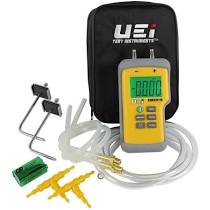
OR
H27-718 FIELDPIECE SDMN6 DUAL PORT