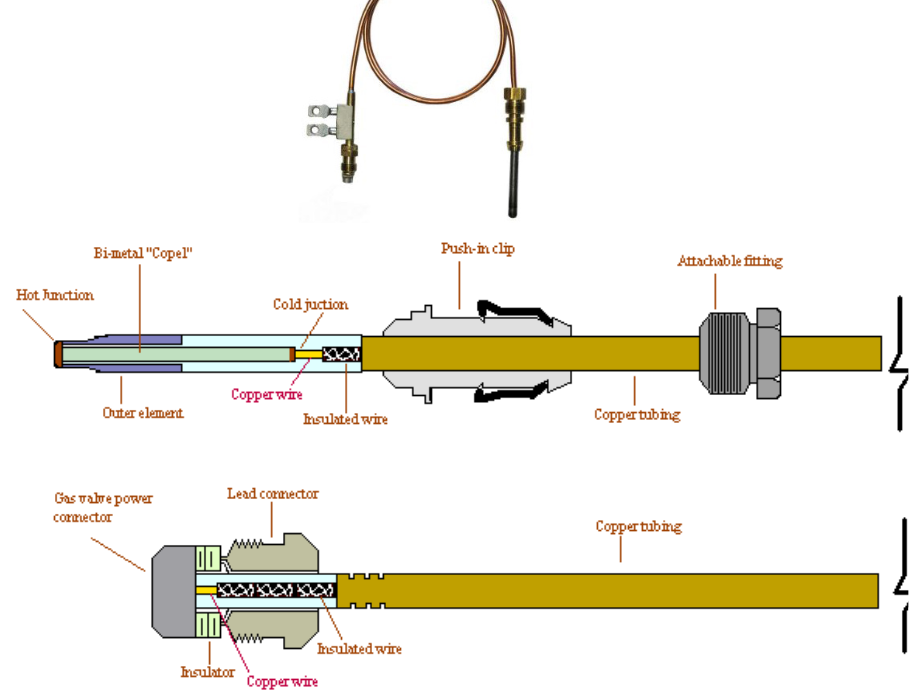
A thermocouple is a device that generates electricity when heated. It consists of two dissimilar metals
joined together at a ‘hot junction’ or welded tip. When the hot junction is heated by the pilot light to
approximately 1200°F and the ‘cold junction’ is held around 700°F, this temperature difference will
produce a small electrical current. This is why flame impingement is so critical; the pilot flame should
be hitting the top 3/8” of the thermocouple. This current travels along an insulated wire to the safety
magnet in the gas valve and then returns via the outside copper casing. The thermocouple connector
nut is part of the electrical circuit and must be properly secured (hand tight+ 1 I 4 turn) in order to
complete the circuit. When the magnet is energized by the thermocouple, it allows gas flow to the
pilot assembly. Should anything happen to the pilot flame, the hot junction will cool off, decreasing the
temperature difference and causing the voltage output of the thermocouple to drop. A thermocouple
should produce anywhere from 18 to 30 mVDC. Should the reading stay below 18 mVDC open circuit
after pilot adjustment, replace the thermocouple.