


From the Goodman Service Manual:
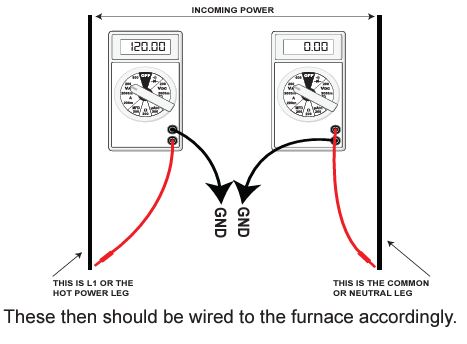
As more and more electronic's are introduced to the Heating Trade, Polarization of incoming power and phasing of primary to secondary voltage on transformers becomes more important. Polarization has been apparent in the Appliance industry since the introduction of the three prong plug, however, the Heating Industry does not use a plug for incoming power, but is hard wired.
Some of the electronic boards being used today, with flame rectification, will not function properly and/or at all without polarization of incoming power. Some also require phasing between the primary and secondary sides of step-down transformers.
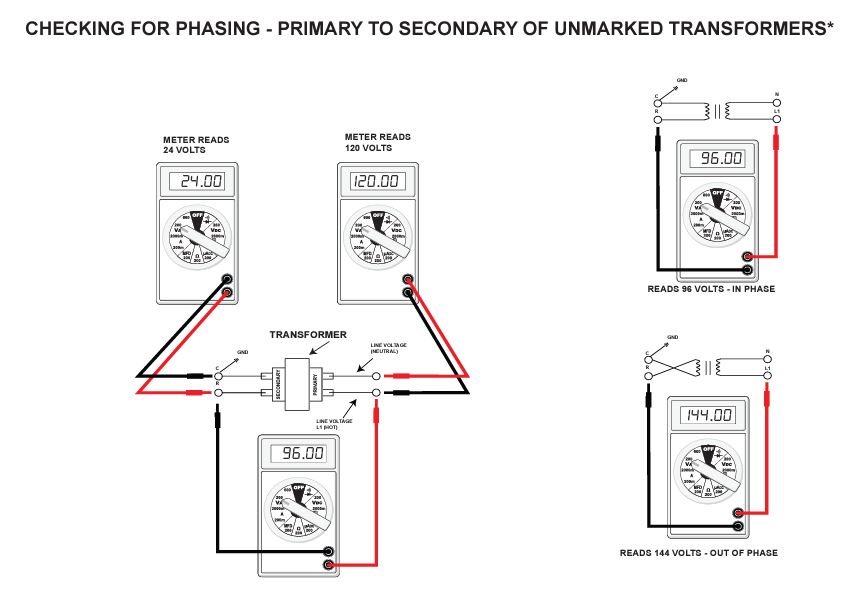
If meter reads approximately 96 volts - the primary to secondary are in phase - if reads approximately 144 volts out of phase - reverse low voltage wires.
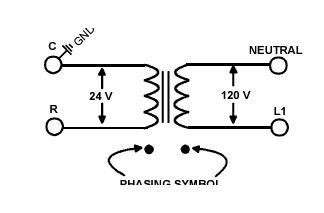
*NOTE: For flame rectification the common side of the secondary voltage (24 V) is cabinet grounded. If you were to bench test a transformer the primary neutral and secondary common must be connected together for testing purposes. Some transformers will display phasing symbols as shown in the illustration below to assist in determining proper transformer phasing. Checking for polarization and phasing should become a habit in servicing. Let's start now.
NOTE: Newer integrated ignition controls have a diagnostic flash code for reversed polarity (Refer to Troubleshooting Diagnostic Chart for LED Codes).

