


Data Line Voltage Troubleshooting and Bias Switches
Proper data voltage is essential to robust and reliable communication on the ComfortNet™ system.
• Any wiring issues must be corrected for good communication.
Poor wiring connections at the terminal blocks
Low voltage wires that are shorted, grounded or broken.
Communicating wires that are not connected to the proper terminals.
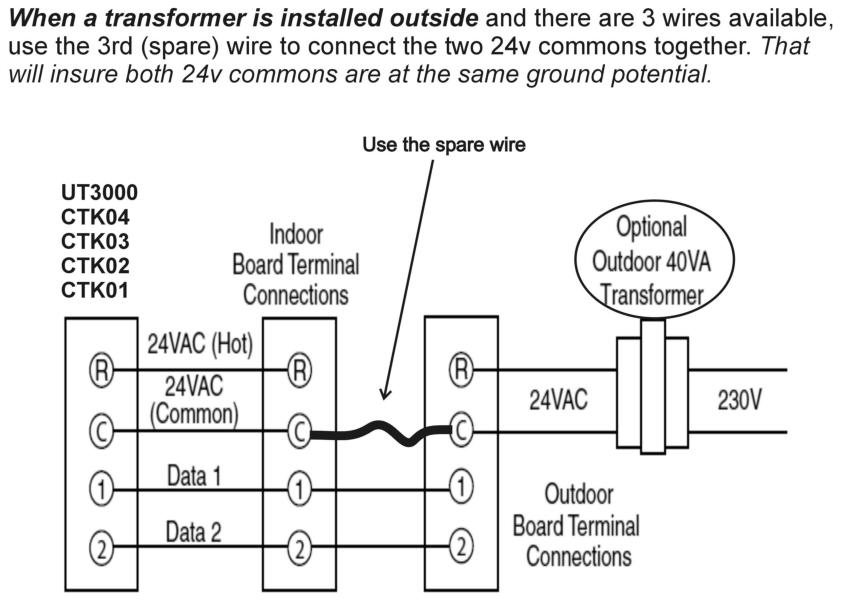
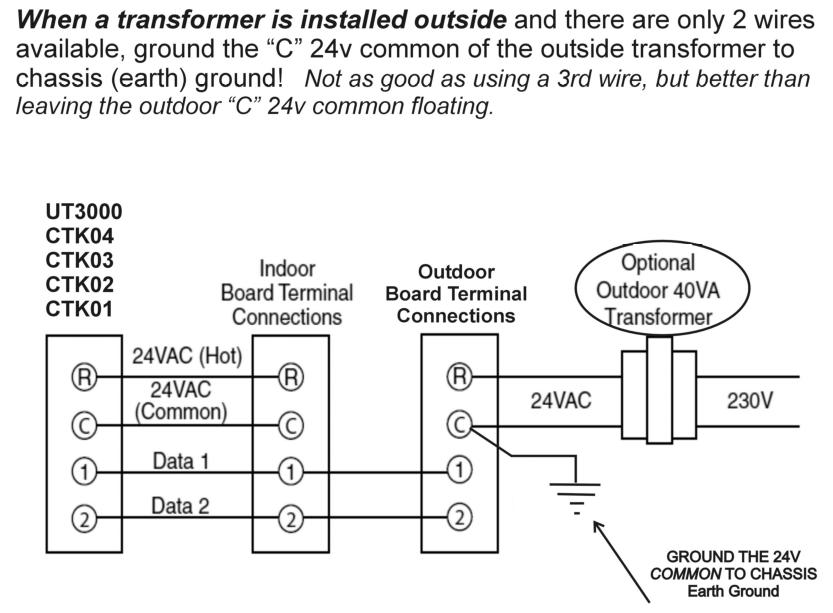
24 volt common outside and inside are not at the same ground
potential
• Bias dip switch conflict between indoor board and outdoor
board.
• A removable plug connector is provided with the control to make
thermostat wire connections.
• This plug may be removed, wire connections made to the plug, and
replaced.
• It is STRONGLY recommended that you do not connect multiple
wires into a single terminal.
• Wire nuts are recommended to ensure one wire is used for each
terminal.
• Failure to do so may result in intermittent operation.
• Typical 18 AWG thermostat wire may be used to wire the system
components. One hundred (100) feet is the maximum length of
wire between indoor unit and outdoor unit, or between indoor unit
and thermostat.
If all the wiring and connections are per the IO and the ComfortNet™ system will not operate properly the issue could be a bias switch conflict.
Proper bias data voltages are the key to proper communication on the ComfortNet™ system.
Only one unit should control the Bias.
Air Handler or Furnace should never have their bias switches moved.
Indoor bias switches are always in the “ON” position
A/C and Heat Pump bias switches can be moved.
Thermostats do not have bias switches.
It maybe necessary to move bias switches on the outdoor unit to
achieve proper bias. If the switches need to be moved both switches
must be moved.
Checking Bias Voltage:
• Remove communicating wires from outdoor board and thermostat and check
voltage at the indoor board.
• DC voltage from C to data 1 should read approximately 1.9vdc or 2.8vdc for
some furnaces. (Figure 1)
• DC voltage from C to data 2 should read approximately 1.3vdc. Or 2.2vdc for
some furnaces (Figure 2)
• Difference in voltage should be .6vdc.
Reconnect communicating wires from outdoor board check voltage again For
Example:
• DC voltage from C to data 1 now reads approximately 1.83vdc. (Figure 1)
• DC voltage from C to data 2 reads approximately 1.50vdc. (Figure 2)
• Difference in voltage is now .33vdc instead of .6vdc.
• Bias switches on outdoor board need to be changed to “off” from the factory
setting of “on”.
Setting Outdoor Bias Switches
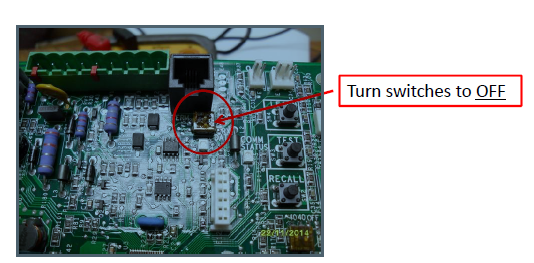
• Remove plastic film covering switches with screw driver or knife.
• Turn both Bias switches to the off position.
• Recheck DC voltage between C and 1 and C and 2.
• Recheck DC voltage with wires from outdoor board connected.
• DC voltage from C to data 1 should read approximately 1.9vdc or 2.8vdc
furnaces (Figure 1)
• DC voltage from C to data 2 should read approximately 1.3vdc or 2.2vdc
furnaces (Figure 2)
• Difference in voltage should be .6vdc.
• Adjustment is complete and communication should be working.

