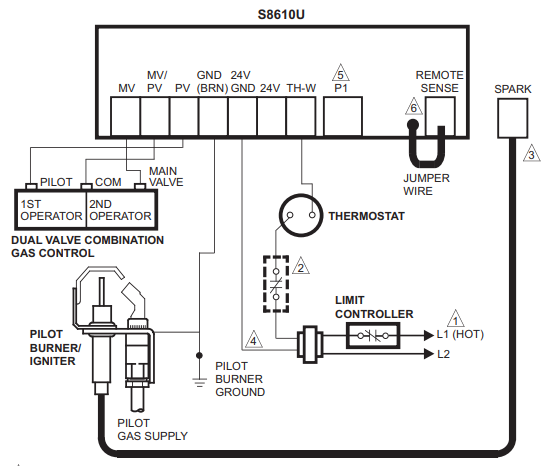
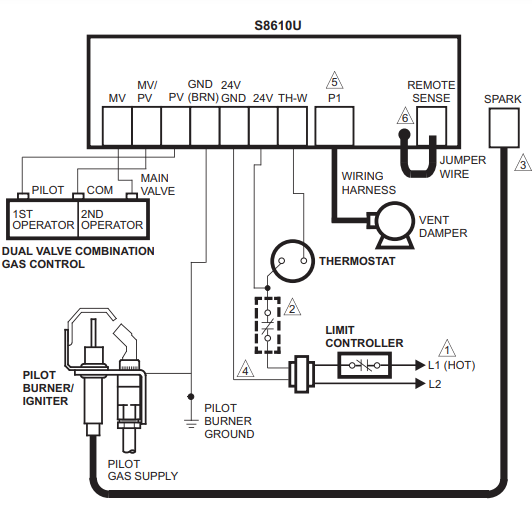
1. The S8610U spark to pilot is a 24v control module and does not require 115v to operate.
2. The 24v signal coming "back" from the thermostat is what starts the module. Sometimes this signal is interrupted by a limit switch or possibly pressure switch.
3. Verify where EXACTLY the signal is coming from before condemning the module.
4. The newest version of the module requires the 24v signal to land on "TH-W". Which doesn't make sense because "W" is the call for heat. (older modules labeled this terminal 24v).
5. The 24v terminal on the newer version modules is ONLY NEEDED if you have a vent damper on the system.
6. S8610U can do remote sense (separate flame sensor) or combined sensing (built in jumper) with the ignition rod. After 10 cycles this will be stored into its memory and no changes can be made after. Make sure the rods and pilot hood is clean, free from rust, soot or corrosion.
7. When the S8610U gets a call for heat, The module will begin to spark and send 24v to the pilot valve terminal PV.
8. Once pilot flame is established, the S8610U will then send 24v to the main valve terminal MV. The combined MV/PV terminal is a common or 24v ground.
9. If the flame signal stays above 1 micro-amp dc uA, the module will continue to run until the call for heat is satisfied.
10. You can manually check the flame signal by placing your meter leads on the Flame Current Pad. Or, you can count the LED blinks.
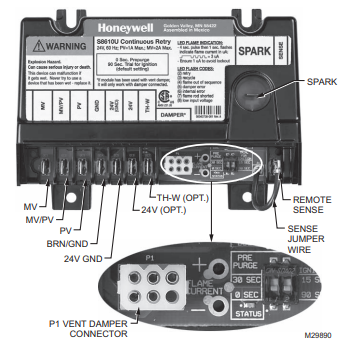
11. In order to check this signa on older versions, you had to place your meter in series with the 24v GND terminal and ground.
12. Follow this typical wiring diagram to make sure its wired up correctly. Using the vent damper plug is OPTIONAL and nothing needs to be plugged into it. After 10 cycles (calls for heat) the module will "Lock" this feature in and no changes can be made afterwards. This means if you unplug the damper, you will get an error.